 |
To create one of the world’s outstanding zoological institution, that is a center of the excellence for conservation, research and education. |
 |
Resourceful conservation of animals by means of learning achieved through the exhibition of species who were adopted with loving care. |
- Conservation
- Animal Welfare
- Breading and Research
- Education
- Exhibition
 | ||
| - | Keeping species for coordinated national and international captioned captive breeding programmers. | |
| – | Do best for animals to keep them healthy, well fed condition in naturalized environments. | |
| – | carry out conservation oriented scientific research programmes in the fields of zoology, veterinary etc. | |
| – | Enlighten people about animal world by direct and indirect ways of education. | |
| – | provide the visitors equal opportunities participate in high quality, valuable, unmemorable experience. |
|
John Hagenbeck, who initially started the Dehiwala Zoo, belongs to a family engaged in animal circuses. He collected and kept the animals in this premises for trade. Mr. Hagenbeck exported wild animals to Europe to his brother Carl Hagenbeck who was one of the biggest animal dealer in Europe at that time. To hold the animals before exporting them to Europe he bought 05 acres of land at Dehiwala at the beginning of the century. This became quite popular among the residents of the area. The total area of the collection centre was increased to 11 acres to hold the animals received. Subsequently the centre was taken over by the government in 1936. The extent of the land was increased gradually to present status of 23 acres. (11 ha. Approximately). |
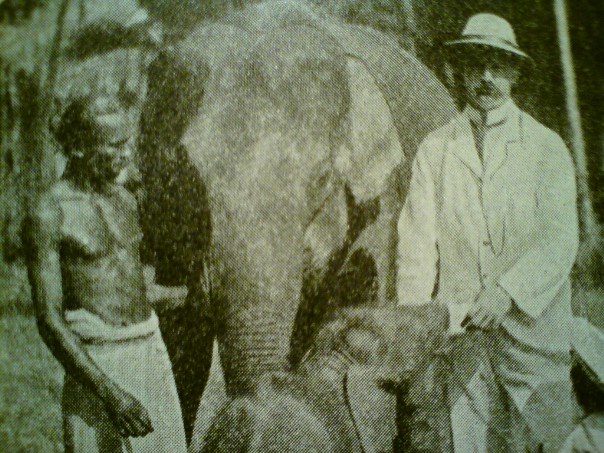 Figure : John Hagenbeck |